CONTEXT
In Ushti’s project region in Nepal, the remote district of Dhading, many families come from marginalised communities. They often face discrimination and rely on unstable day labour to survive. Limited financial resources make it difficult for parents to support their children’s education, leading many children to drop out of school at an early age. As a result, child labour remains a widespread and persistent challenge.

INCLUSIVE EDUCATION AND LIVELIHOOD SUPPORT
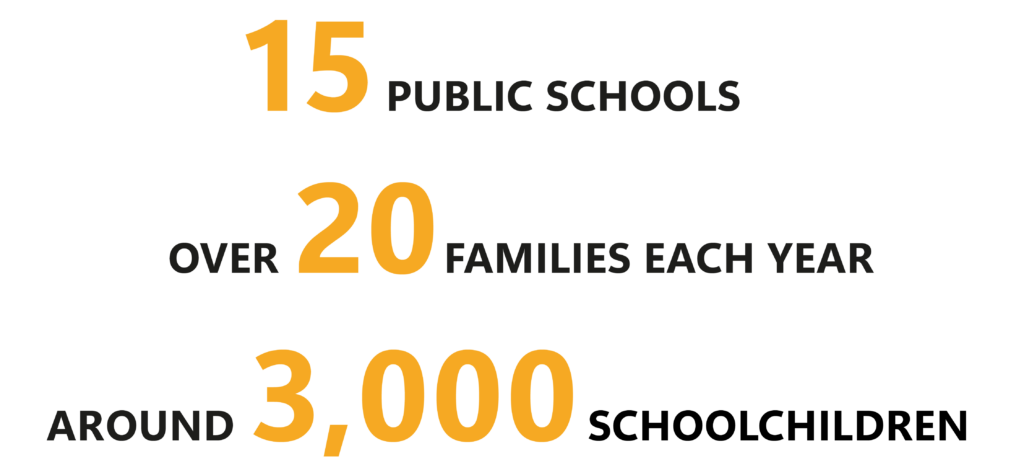
In 2019, Usthi began setting up an education project in Dhading District to support families affected by poverty and strengthen education in the region. The project operates on several levels; it not only improves access to schooling for around 3,000 children but also helps over 20 families each year to increase their household income. By helping parents build stable sources of income, the project empowers them to sustainably finance their children’s education over time. In addition, Usthi invests in infrastructure and quality of education across 15 schools in the region.
The project also supports 22 visually impaired children who live in a residential home at one of the project schools. Investments are made both in the school and the residential facilities to ensure inclusive, needs-based education and improved living conditions.
Beyond direct support, the project team actively engages with the community to raise awareness about children’s rights, the risks of child labour, and essential health issues. Through this integrated approach, Usthi aims to create lasting change; strengthening education systems, reducing poverty, and giving children the opportunity to build a better future.
What two goats have to do with Rashmi Tamang’s daughter’s education
Rashmi Tamang and her family live in the Dhading project region in Nepal. As members of the Tamang community—a marginalized minority—they, like many others in the area, experience multidimensional poverty. To help support the household, the children had to contribute to the family income and could only attend school irregularly. In 2022, Rashmi and her family therefore received two goats through the project. Raising livestock has since helped them improve their livelihood. Rashmi has already been able to sell her first goat kids, enabling her to pay for her daughter’s education. To further increase her income, she plans to open a small shop near a school. As her husband is often away for work, Rashmi manages the goat farm and the family’s finances.
MORE FROM THE PROJECT EMPOWERING CHILDREN & FAMILIES
OTHER PROJECTS