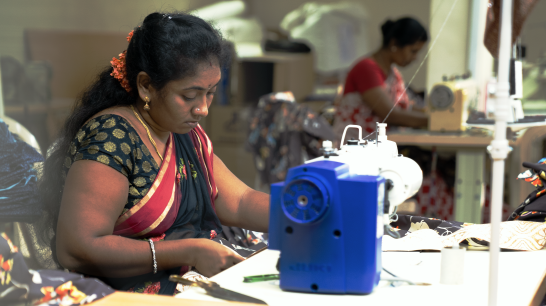
Creating opportunities with sewing machines

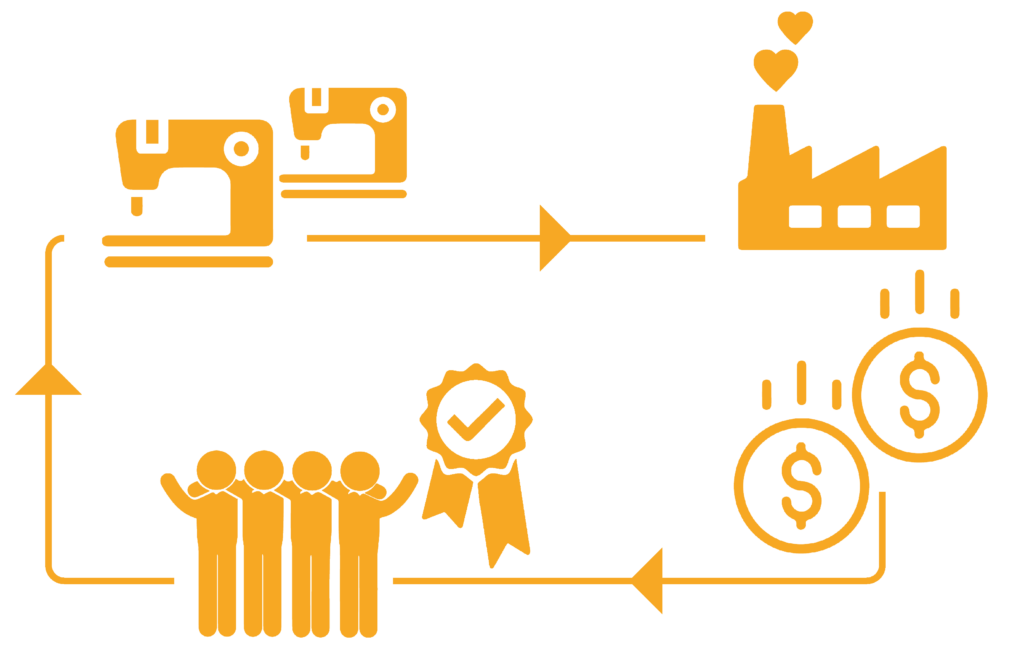
In order to allow the partner organizations and projects to become independent in the long term, Usthi supports social business ventures. The profit flows into the projects and creates a cycle that provides more and more young people with access to education and thus new perspectives.

In Hyderabad, a textile processing centre is connected to the professional skills courses for young men and women. As a social enterprise, it not only offers employment to graduates, but also finances the skills training of new course participants. This circulation strengthens the local ownership and allows the projects to become self-sufficient.
We are launching this campaign to finance new sewing machines worth a total of CHF 3,150, which are urgently needed in the textile processing center.

Because: more orders equate to more fair jobs and at the same time more income, that flows back into the project.

Every contribution matters to reach our goal! Thank you for your support.
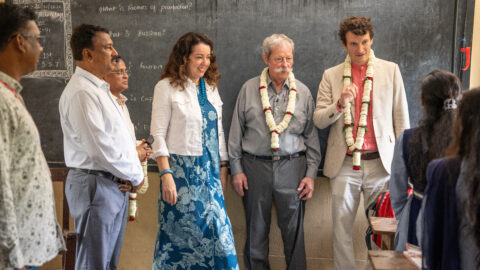
Besuch der Botschaftsdelegation in der Penthakata-Schule

Swiss Ambassador Tissafi Visits Usthi

Three and a half days full of encounters, impressions and truly heartfelt moments in the Indian state of Odisha are now behind us. We are honoured and grateful for the visit of Maya Tissafi, Ambassador of Switzerland to India and Bhutan, and Simon Schäfer, First Secretary of the Swiss Embassy in New Delhi. Together with […]

Project Handover: Thaddeus School in Bhastara, India

The Thaddeus School began operating in 2006 with 45 small children. Since then, the school has grown significantly, received its own school building, and now teaches around 200 children from kindergarten to 10th grade. At the end of 2025, Usthi will hand over the project entirely to the Indian partner organization. A meaningful moment and […]

“I now feel I can dream again”

Despite economic growth, securing a livelihood remains a major challenge for many families in India. The majority of Indians work in the informal labor market, usually without social security or employment contracts and often under precarious working conditions. Access to the labor market and to fairly paid jobs is marked by glaring inequalities: women in […]