
Changes at Usthi

Members of the Board leaving Usthi gave us cause for changes.

For many years, successful achievements of Usthi were substantially marked by the skills and dedication of those leaving the Board, who are taking on new responsibilities now. We would like to thank them for their long lasting loyalty and the work they have done for Usthi. The new members of the board are introducing themselves on our website.

Usthi’s managing director, Tanja Lirgg, is also leaving the foundation at the end of April. She directed Usthi foundation with competence, putting much heart and soul into it. Usthi and its team would like to thank Tanja Lirgg for her vigilant leadership. The new focus on supporting abused girls and young women, brought in the programmes by Tanja Lirgg, will be continued and maintained in her sence. The Usthi team will be missing Tanja Lirgg much and whishes her the best for her future. The new managing director will be introduced in the next newsletter.
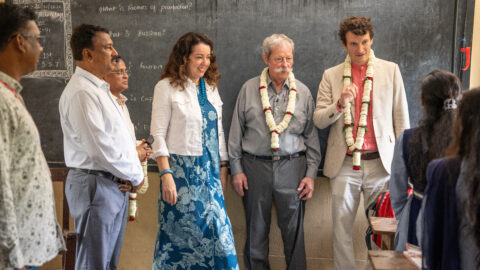
Besuch der Botschaftsdelegation in der Penthakata-Schule

Swiss Ambassador Tissafi Visits Usthi

Three and a half days full of encounters, impressions and truly heartfelt moments in the Indian state of Odisha are now behind us. We are honoured and grateful for the visit of Maya Tissafi, Ambassador of Switzerland to India and Bhutan, and Simon Schäfer, First Secretary of the Swiss Embassy in New Delhi. Together with […]

Project Handover: Thaddeus School in Bhastara, India

The Thaddeus School began operating in 2006 with 45 small children. Since then, the school has grown significantly, received its own school building, and now teaches around 200 children from kindergarten to 10th grade. At the end of 2025, Usthi will hand over the project entirely to the Indian partner organization. A meaningful moment and […]

“I now feel I can dream again”

Despite economic growth, securing a livelihood remains a major challenge for many families in India. The majority of Indians work in the informal labor market, usually without social security or employment contracts and often under precarious working conditions. Access to the labor market and to fairly paid jobs is marked by glaring inequalities: women in […]