Annual Report 2015

“The only Thing constant in Life is Change. Heraclitus ’ statement from over two thousand years ago was not only applicable to Usthi in 2015. In Nepal, it only took a few seconds to change the lives of the population completely. Deeply affected by the terrible earthquake in a country where Usthi has long been involved, we decided within hours and despite the diffi cult conditions, to offer assistance as best we could to the population and our programme-partners in Nepal.

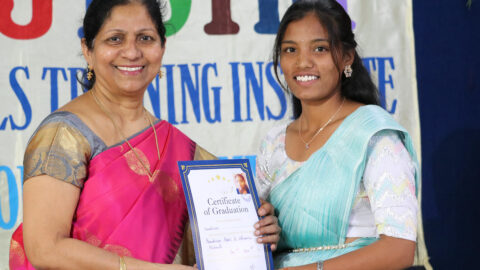
In India we have also achieved important successes and were able positively to infl uence the lives of over 3,000 children and young people – a valuable investment in the next generation. Our educational projects enable young people to take their lives into their own hands and to contribute to changing their surroundings, e.g. in our programme against child abuse, which started in the summer of 2014, 40 abused youngsters and former prostitutes have already completed the training programme and have successfully been integrated into professional life.”
Here you can find the complete annual report 2015.

Besuch der Botschaftsdelegation in der Penthakata-Schule

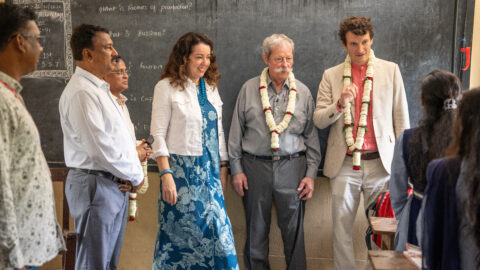
Swiss Ambassador Tissafi Visits Usthi

Three and a half days full of encounters, impressions and truly heartfelt moments in the Indian state of Odisha are now behind us. We are honoured and grateful for the visit of Maya Tissafi, Ambassador of Switzerland to India and Bhutan, and Simon Schäfer, First Secretary of the Swiss Embassy in New Delhi. Together with […]

Project Handover: Thaddeus School in Bhastara, India

The Thaddeus School began operating in 2006 with 45 small children. Since then, the school has grown significantly, received its own school building, and now teaches around 200 children from kindergarten to 10th grade. At the end of 2025, Usthi will hand over the project entirely to the Indian partner organization. A meaningful moment and […]

“I now feel I can dream again”

Despite economic growth, securing a livelihood remains a major challenge for many families in India. The majority of Indians work in the informal labor market, usually without social security or employment contracts and often under precarious working conditions. Access to the labor market and to fairly paid jobs is marked by glaring inequalities: women in […]